5 Must-Know Facts: What Locksmiths Can (and Can’t) Do Legally
TOP-RATED LOCKSMITH SERVICES IN FRIENDSWOOD & GREATER HOUSTON
Hiring a Lokcsmith isn’t just about speed—it’s about trust, compliance, and protecting your property. In Houston and the surrounding Clear Lake/Friendswood area, locksmith legal requirements ensure that only qualified, licensed locksmith Houston professionals can perform services like rekeys, car unlocks, and key fob programming. Understanding emergency locksmith laws and car key replacement regulations helps you avoid scams, keep your warranty intact, and make informed decisions when you’re locked out or moving into a new home. This guide breaks down what reputable locksmiths can—and cannot—do, so you know exactly what to expect before you book.
What a Licensed Locksmith Can Do: Rekeys, Installs, Auto Keys & More
A properly licensed locksmith in Texas is legally authorized to sell, install, service, and maintain mechanical security devices—think deadbolts, cylinders, and door hardware—as well as perform rekeys, lock replacements/installs, and design master key systems for homes and businesses; many also handle electronic access and related security contractor work when covered under the DPS license classes. On the automotive side, a pro can unlock vehicles without damage, originate and duplicate keys, program transponders and smart key fobs, and repair or replace ignitions—all performed as a regulated private‐security service under the state’s DPS program. In short: if it involves legally servicing locks, keys, or access devices (residential, commercial, or automotive) as a paid service, a licensed locksmith can do it—provided they hold the appropriate Texas credentials.
What Locksmiths Can’t Do (Legally): Proof of Ownership, IDs, and Boundaries
Before a pro unlocks anything, they have to protect you—and the law. Here’s the simple stuff legit locksmiths will not do:
🚫 Open doors or make keys without proof you’re authorized (ID + matching docs).
🔐 Copy restricted / high-security keys without the correct card/code or written OK.
🪪 Work or advertise as a locksmith without proper licensing/registration where required.
🗝️ Rekey, open safes, or bypass alarms for anyone who isn’t the verified owner/tenant.
💸 Use bait-and-switch pricing or hide fees; you’re entitled to clear, itemized costs.
🧰 Use destructive entry when a non-destructive method is feasible—without explaining risks and getting consent.
🏢 Duplicate workplace/HOA/master keys without authorization from the controlling entity.
🏷️ Falsely claim dealer/OEM ties or warranties they don’t actually hold.
🔑 Keep your keys, codes, or access data beyond the job or share them with others.
Licensing, Insurance, and ID: How to Vet a Legit Locksmith in Houston
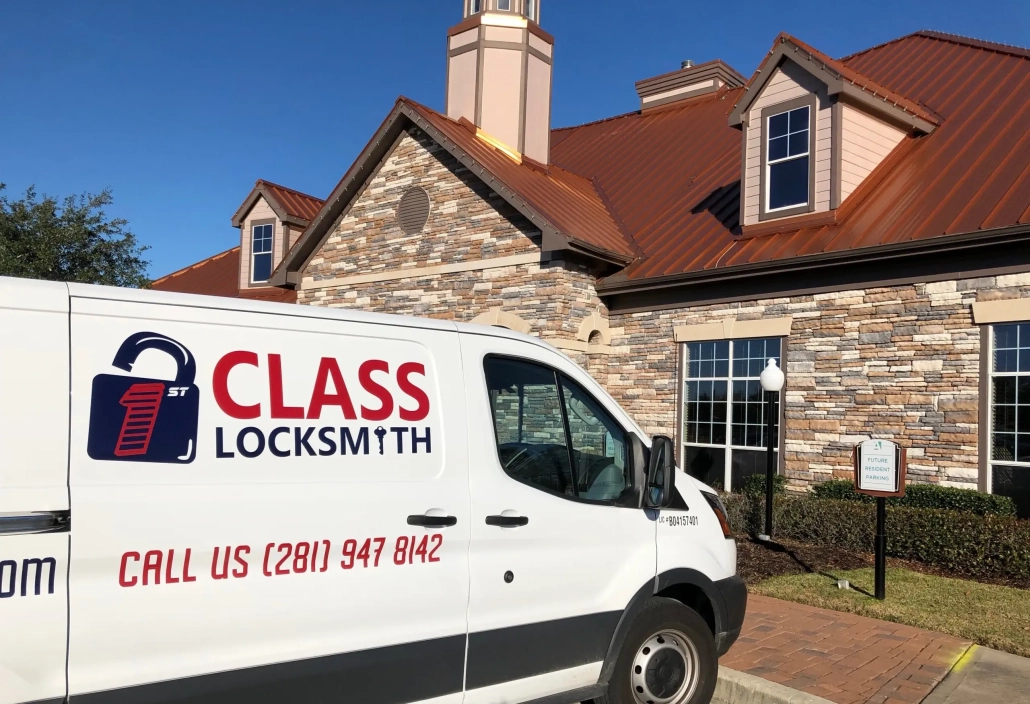
Before you book, treat vetting like a mini security check. Look for a licensed locksmith whose legal business name, phone, and address match across the website, invoice, and vehicle. When the tech arrives, they should be in a marked service vehicle, carry visible ID (and share a license number when asked), and be willing to show proof of insurance or a certificate on request. Ask for a quick recap of the job in writing—what will be opened/installed, methods, and expected outcome—plus a simple warranty statement for parts and labor. A reputable pro will confirm you’re authorized (ID + docs), explain non-destructive options first, and answer basic questions about response time, coverage area, and after-hours protocol without pressure tactics. If anything feels inconsistent, it’s okay to decline and call another provider.
Pricing Transparency & Receipts: Your Rights in an Emergency Call
Even in a lockout, you’re entitled to clear, upfront pricing. Ask for a total estimate range before dispatch that includes: service/labor, trip or after-hours fee, any programming or specialty charges, and hardware costs if parts are needed. Onsite, a pro should explain any change in scope before starting work and get your OK—especially if destructive entry is the only option. After the job, request an itemized receipt listing the company name, license/ID, time on site, services performed, parts used, labor, surcharges, taxes, and warranty terms. You should also know accepted payments and any cancellation or minimum-call policies. Transparent quotes, written authorization, and a clean invoice protect you—and they’re hallmarks of a trustworthy emergency locksmith.
Red Flags & Scams to Avoid: How to Protect Yourself and Your Property
No job is too big or small. At First Class Locksmith, we take pride in helping Dickinson residents and business owners feel safe and secure. Whether you need a new key, a fast unlock, or a full lock system upgrade, we’ll take care of it quickly and professionally.
Call now to speak to a locksmith in Dickinson, TX today.
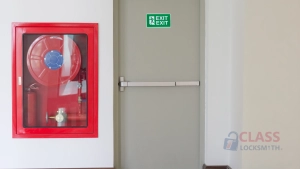
What Pros Can (and Can’t) Do—Fire Doors & Life-Safety (Legally)
Can: Perform fire door inspections and issue deficiency reports when properly trained—documenting gaps, latching, hardware, and labels to help the owner correct issues. Can’t: “Pass” a noncompliant door or ignore required listings; inspections must be honest and documented.
Can: Do corrective repairs (closers, hinges, latching, re-hanging) to restore self-closing and positive latching with the right methods. Can’t: Use unlisted fixes or alter the assembly in ways that void the fire rating.
Can:Replace fire-rated hardware—exit devices, closers, locksets, cylinders—when the parts are listed/approved for that door and installed per spec. Can’t: Substitute off-spec hardware or drill/modify beyond what the listing allows.
Can:Rekey and set up key control (restricted/master systems) that preserve free egress and assembly ratings. Can’t: Install functions that impede emergency egress or duplicate restricted keys without proper authorization.
Can: Coordinate field labeling (where permitted) and compile documentation packets for AHJ/insurer audits—photos, parts lists, and work summaries. Can’t: Mislabel or apply unauthorized labels to claim compliance that isn’t there.
Can: Provide emergency response when a fire door fails—stabilize safely and use listed temporary measures until permanent repairs are completed. Can’t: Leave an opening in a condition that violates life-safety or building codes.
FAQs: Legal Lines Every Customer Should Know
1) Do locksmiths need a license to work on my property or vehicle? In regulated areas, yes. Legit providers operate under required licensing/registration, carry ID/insurance, and put the same business name on the website, invoice, and service vehicle.
2) Can a locksmith open my door or make a car key without paperwork? No. Pros verify authorization first (photo ID + matching docs like registration, lease, or written owner consent). If proof doesn’t match, they must decline.
3) Are there limits on fire-door work? Yes. All repairs, hardware swaps, seals, and clearances must follow the door/frame listing and code. Using listed parts and correct methods is mandatory to keep the rating valid.
4) Why won’t some keys be duplicated? Restricted/high-security keys require the proper card, code, or written authorization from the controlling entity (business, HOA, property manager). Without it, duplication is not allowed.
5) What are my rights on pricing and documentation? You’re entitled to clear estimates, an explanation of methods (non-destructive first), and an itemized receipt showing parts, labor, surcharges, and basic warranty. For fire-door work, ask for a compliance packet (photos + listed parts) for your AHJ/insurer records.
PROTECT YOUR PROPERTY—STAY SECURE
Don’t wait for a lockout or break-in to learn your security isn’t ready. Schedule a mobile locksmith visit today. We’ll unlock, rekey, repair, replace hardware, and program keys to keep your home, business, and vehicle safe.
Trustindex verifies that the original source of the review is Google.
Great job Jose! He came out to me on a Sunday after 5pm and helped me unlock my car!
Posted on Google
Taylor Halcumb
Trustindex verifies that the original source of the review is Google.
David was quick and professional. He was very flexible and left no damage to our camper when he unlocked it. His prices were very reasonable compared to others in the area.
Posted on Google
Chad Boren
Trustindex verifies that the original source of the review is Google.
Quick responses, amazing price, and great work. I will use again!
Posted on Google
Ashley Williams
Trustindex verifies that the original source of the review is Google.
He helped me with my situation and he was very fast. Will be using him again !
Posted on Google
Roderick Hearn
Trustindex verifies that the original source of the review is Google.
Call this gentleman first. He came as soon as we needed him and was priced very fairly. So grateful for honest businesses like this.
Posted on Google
larry osula
Trustindex verifies that the original source of the review is Google.
Great service
Posted on Google
Elizabeth A
Trustindex verifies that the original source of the review is Google.
He was super fast and accommodating, i appreciated the fact that he came and tried multiple things and didn’t give up! He is amazing customer service at 100%!
Posted on Google
Chandra Lindsey
Trustindex verifies that the original source of the review is Google.
Very fast and professional. He was there within an hour.
Posted on Google
Mina Hammond
Trustindex verifies that the original source of the review is Google.
I had an excellent experience with First Class Locksmith. My child accidentally locked the car while it was running, and I was in a panic. They were incredibly prompt in responding and arrived quickly to unlock the car. The best part was that my car was completely fine, with no damages. I really appreciated their professionalism and efficiency. Highly recommend!
Posted on Google
Adewale Ogbogho
Trustindex verifies that the original source of the review is Google.
Used his services for my car to program extra keys to my car and it was very quick and affordable. I would highly recommend his services.
Verified by Trustindex
Trustindex verified badge is the Universal Symbol of Trust. Only the greatest companies can get the verified badge who has a review score above 4.5, based on customer reviews over the past 12 months. Read more
Need a Locksmith? Call First Class Locksmith Today!
Locked out? Need new keys? Want to upgrade your security? We’re here to help. First Class Locksmith is just a call away, providing fast, professional, and reliable locksmith services wherever you are.
https://firstclasslocksmith.com/wp-content/uploads/2025/10/Fire-Door-Compliance-and-Locksmith-Services-1.webp10801920Alexis Suzahttp://firstclasslocksmith.com/wp-content/uploads/2017/07/1stclass-locksmith-service-houston-300x108.pngAlexis Suza2025-10-28 16:22:132025-10-30 15:21:54What Locksmiths Can (and Can’t) Do Legally